Fifty years before Roswell, a small town in North Texas had its own UFO crash story — complete with a wrecked airship, a dead pilot who was supposedly not from Earth, and a grave that people still visit today. The Aurora incident of 1897 is the oldest American UFO crash legend, and it began not with a government file, but with a single newspaper article.
What the Dallas Morning News Reported
On April 19, 1897, the Dallas Morning News published a story by its stringer S. E. Haydon under the headline “A Windmill Demolishes It.” According to Haydon, the crash had happened two days earlier, around 6 a.m. A cigar-shaped airship, which had been reported sailing over the country for weeks, came over the town of Aurora traveling due north. It was moving slowly, only 10 or 12 miles an hour, and was gradually settling toward the ground, as if some of its machinery was out of order.
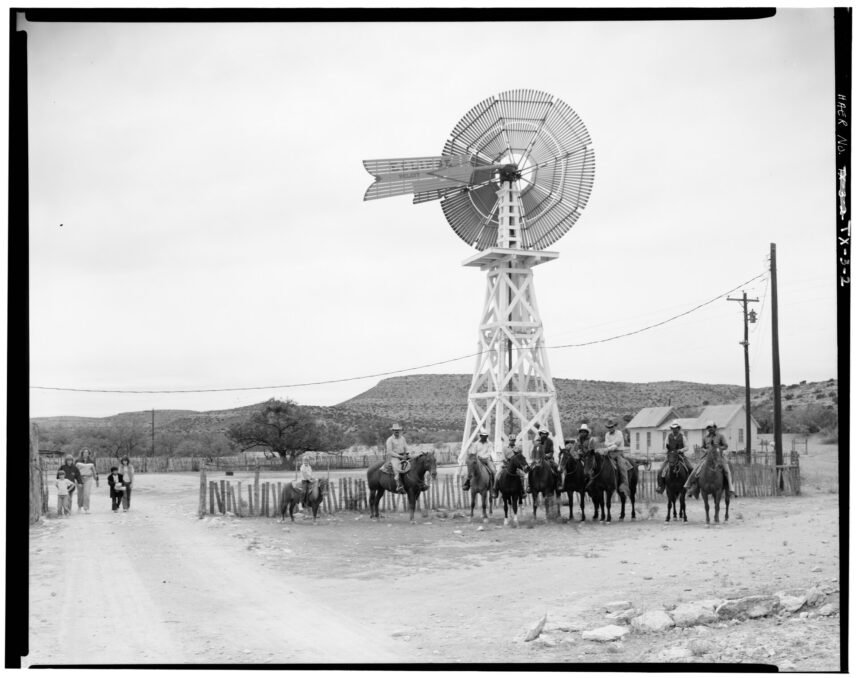
It sailed over the public square, and when it reached the northern part of town, it collided with the tower of Judge J. S. Proctor’s windmill. The airship went to pieces with a terrific explosion, scattering debris over several acres of ground. The blast wrecked the windmill and its water tank and destroyed the judge’s flower garden.
The pilot, Haydon wrote, was supposed to have been the only person aboard. His remains were badly disfigured, but “enough of the original has been picked up to show that he was not an inhabitant of this world.” T. J. Weems, a U.S. Army Signal Service officer in Aurora and an authority on astronomy, gave his opinion that the pilot was “a native of the planet Mars.” Papers found on the pilot’s body were written in unknown hieroglyphics and could not be deciphered. The ship itself, Haydon reported, was built of an unknown metal resembling a mixture of aluminum and silver, and must have weighed several tons.
The Burial in Aurora Cemetery
According to the story, the townspeople buried the pilot in the Aurora Cemetery. Wreckage from the crash was dumped into a nearby well located under the damaged windmill, while some of it was said to have ended up in the grave with the body. The cemetery still stands today, and a Texas Historical Commission marker outside it briefly mentions the incident. Over the decades, the supposed pilot’s grave became a local attraction, and the unknown occupant became known to visitors as “Ned,” or the “Little Traveler.”
Aurora is a small town in Wise County, about 25 miles northwest of Fort Worth. In the 1890s it was already a town in decline, a former frontier stop that had fallen on hard times after the railroad passed it by. That detail matters, because it sits at the heart of the debate over whether any of this happened at all.
The Mystery Airship Wave of 1896-1897
Haydon’s story did not appear out of nowhere. For months, newspapers across the United States had been full of reports of mysterious airships — large, lighted, cigar-shaped craft seen drifting over towns and farms. The wave began in California in late 1896 and moved east through the winter and spring of 1897, reaching Texas that April. Hundreds of sightings were reported, and many newspapers treated them as real, if unexplained, events.
Aurora was the most dramatic story of the whole wave: the only one in which an airship supposedly crashed, leaving a body and wreckage behind. That is why it is still remembered when most of the other airship reports are forgotten.


The Hoax Theory
Skeptics have long argued that the whole story was invented. The UFO investigator Philip Klass researched the case for his book “UFOs Explained” and found that no follow-up newspaper stories ever appeared about the crash, no witnesses could be found to support Haydon’s account, and there was no record that Judge Proctor even had a windmill.
The strongest evidence for a hoax came in a 1980 Time magazine interview with Etta Pegues, an 86-year-old Aurora resident, who said Haydon had fabricated the entire story. According to Pegues, Haydon “wrote it as a joke and to bring interest to Aurora.” The town needed attention, and a crashed spaceship with a dead Martian was guaranteed to provide it.
But the case is not quite that simple. Later investigators found the remains of a windmill base near the well site, which undercut the claim that Proctor never had a windmill. In 1973, Dallas Times-Herald aviation reporter Bill Case found a rough-hewn rock in the cemetery that he contended was the stone marker used for the pilot’s burial, bearing scratches he said represented the airship. That same year, UFO researcher Hayden Hewes asked to open the grave, but the cemetery association refused. The grave has never been exhumed, so the one test that could settle the story has never happened.
What Is Still Unproven
The Aurora incident survives as a legend, not as a case file. No piece of the wreckage has ever been produced for scientific testing, no photograph of the craft or the pilot exists, and no official record of the crash has been found. The Dallas Morning News article is the only contemporary source, and its author may well have invented it.
What is certain is that no evidence from Aurora proves alien technology. The Pentagon’s AARO review of 80 years of U.S. government UFO files, published in 2024, found no evidence of alien craft or reverse-engineered technology anywhere — and Aurora, with no surviving physical evidence at all, is the weakest link in that chain.
Yet the story endures. It was dramatized in the 1986 film “The Aurora Encounter,” discussed on the History Channel’s “Ancient Aliens,” and written up in Wallace O. Chariton’s 1991 book “The Great Texas Airship Mystery.” Half a century before Roswell gave America its most famous UFO crash, Aurora gave it the template: a wreck, a body, a secret burial, and a town that never quite let the story go.
Key Facts
| Detail | Fact |
|---|---|
| Date | Morning of April 17, 1897, reported April 19, 1897 |
| Location | Aurora, Wise County, Texas, about 25 miles northwest of Fort Worth |
| Source | S. E. Haydon, “A Windmill Demolishes It,” Dallas Morning News, April 19, 1897 |
| The craft | Cigar-shaped airship, traveling due north at 10-12 mph, settling toward the ground |
| The crash | Hit Judge J. S. Proctor’s windmill tower around 6 a.m., exploded, debris over several acres |
| The pilot | Said to be the only one aboard; remains disfigured; T. J. Weems called him “a native of the planet Mars” |
| The burial | Pilot reportedly buried in Aurora Cemetery; wreckage dumped in a well under the windmill |
| Hoax evidence | Etta Pegues (1980 Time interview) said Haydon invented it as a joke to bring interest to Aurora |
| Counter-evidence | Windmill base remains found near the well site; grave never exhumed |
| Official status | No physical evidence; no proof of alien technology |