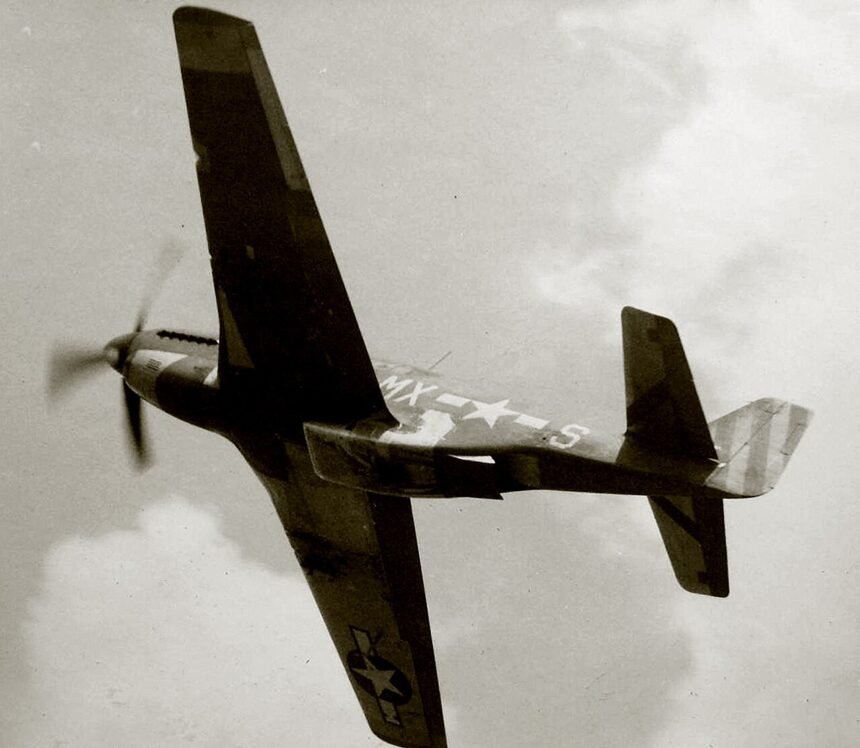
On January 7, 1948, a decorated fighter pilot climbed his Mustang toward a strange object hanging over Fort Knox, Kentucky — and never came home. Captain Thomas F. Mantell was 25 years old, a World War II veteran with 2,867 flight hours and a Distinguished Flying Cross. Within hours he was dead, his plane scattered across a farm field. It remains the only known case of a pilot dying while chasing a UFO, and it turned a local sighting into one of the most publicized UFO stories in American history.
The Afternoon Over Fort Knox
At 1:15 p.m., Godman Army Airfield at Fort Knox received a call from the Kentucky Highway Patrol: people near Maysville, in northeastern Kentucky, were reporting an unusual object in the sky. A second call followed at 1:35 p.m. By about 1:45 p.m., the control tower operators at Godman could see it themselves — a large, round object, seemingly stationary, hanging in the southern sky. Two tower personnel, Tech Sergeant Quinton Blackwell and Private First Class Stanley Oliver, later described it as resembling an ice-cream cone or a parachute: white and round on top, with a conical shape underneath.
Four F-51D Mustangs of C Flight, 165th Fighter Squadron, Kentucky Air National Guard, happened to be flying nearby on a training flight from Marietta Air Force Base in Georgia back to Louisville. At about 2:45 p.m., the tower asked them to investigate. Flight leader Mantell agreed at once.
“A Metallic Object of Tremendous Size”
Mantell climbed to 15,000 feet and radioed the tower: “The object is directly ahead of me and above me now, moving at about half my speed.” His wingmen, who had no oxygen equipment for flight above 20,000 feet, turned back. Mantell kept climbing. His next radio call was the one that entered UFO legend: “It appears to be a metallic object or possible reflections of sun from a metallic object, and it is of tremendous size.”
Then the radio went silent. The Army later determined that Mantell lost consciousness from lack of oxygen as he climbed above 20,000 feet. His Mustang went into an uncontrolled spiral and crashed near Franklin, Kentucky. The object vanished from the sky at 3:53 p.m. By 5 p.m., search teams had found the wreckage, debris scattered across about half a mile of farmland.
Three Explanations in Four Years
The Air Force needed an answer fast, and its first one was weak. Investigators said Mantell had mistaken the planet Venus for a UFO. The astronomer behind that theory, Dr. J. Allen Hynek, later retracted it himself, saying Venus was not bright enough to be seen in daylight — and other checks showed the planets would not even have been visible in the afternoon sky.
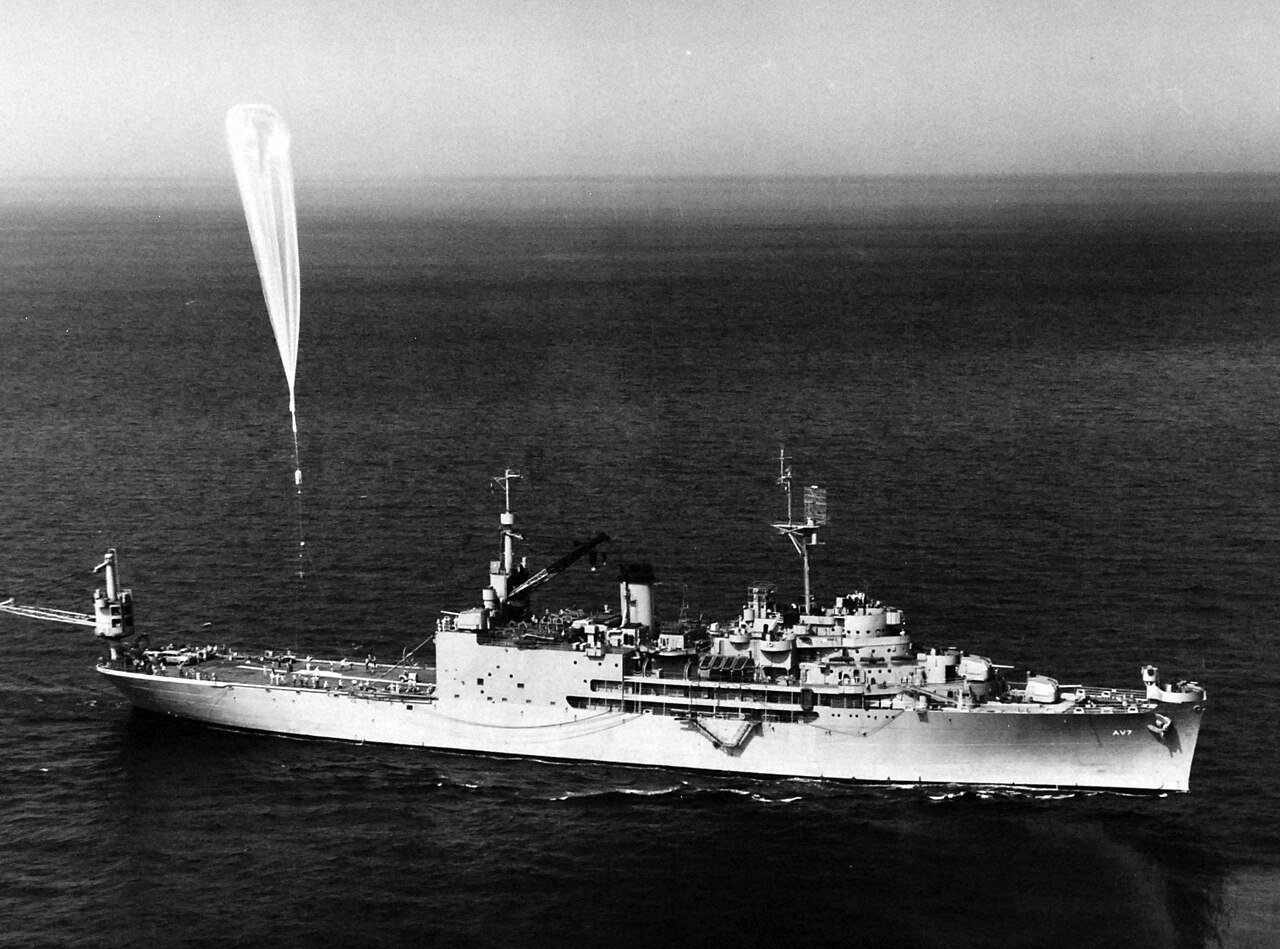
The case was first investigated by Project Sign, the Air Force’s UFO program, later renamed Project Grudge. In 1951, Captain Edward J. Ruppelt took over all Air Force UFO investigations, and one of his first tasks was to reopen the Mantell case. Going back to the eyewitness descriptions — including an astronomer at Vanderbilt University who had watched the object through a telescope and reported a “pear-shaped balloon with cables and a basket attached” — Ruppelt concluded in 1952 that Mantell had most likely been chasing a Skyhook balloon. Skyhook was a top-secret Navy program that sent huge balloons up to 100,000 feet to measure radiation in the upper atmosphere. Mantell, who could not have known about the secret project, may have climbed after it until the thin air killed him.
Why the Case Still Matters
The Mantell incident changed how America talked about UFOs. Before it, flying saucers were mostly a curiosity. After a decorated pilot died in pursuit of one, newspapers across the country treated the subject seriously — and some officers privately feared a spacecraft had shot Mantell down with a superior weapon. The case also exposed a pattern that would repeat for decades: a secret military program, a public mystery, and an official explanation that arrived years too late to calm the rumors.
What Is Still Unproven
To be clear about what this case proves — and what it does not. It proves that a skilled pilot died after climbing too high without oxygen while pursuing something he could not identify. It does not prove that an alien craft was involved. No wreckage of any UFO was ever found, no craft was recovered, and the Pentagon’s AARO office concluded in its March 2024 report that it found no evidence of alien technology. The Skyhook explanation fits the descriptions well — a large, bright, slow-moving balloon at extreme altitude — but it remains an investigator’s conclusion, not a certainty. Seventy-eight years later, the Mantell case endures because it is both a tragedy and a warning: the sky can hide a secret, and chasing it without knowing what it is can be fatal.
The Mantell UFO Incident: Key Facts
| Fact | Detail |
|---|---|
| Date | January 7, 1948 |
| Location | Fort Knox and Franklin, Kentucky, USA |
| Pilot | Captain Thomas F. Mantell Jr., 25, Kentucky Air National Guard |
| Aircraft | F-51D Mustang, 165th Fighter Squadron |
| First report | 1:15 p.m., Kentucky Highway Patrol call to Godman Army Airfield |
| Mantell’s words | “A metallic object … of tremendous size” |
| Cause of death | Loss of consciousness from lack of oxygen above 20,000 feet; plane spiraled and crashed |
| Object vanished | 3:53 p.m.; wreckage found by about 5 p.m. |
| Explanations | Venus (1948, later retracted); Skyhook balloon (Ruppelt, 1952) |
| Official status | Explained as a probable Skyhook balloon; no evidence of alien technology found |