In a landmark judgment delivered on Thursday, November 19, 2026, the International Court of Justice (ICJ) ruled that Myanmar committed genocide against its Rohingya Muslim minority. It is the first time in the 81-year history of the World Court that a state has been found directly responsible for committing genocide.
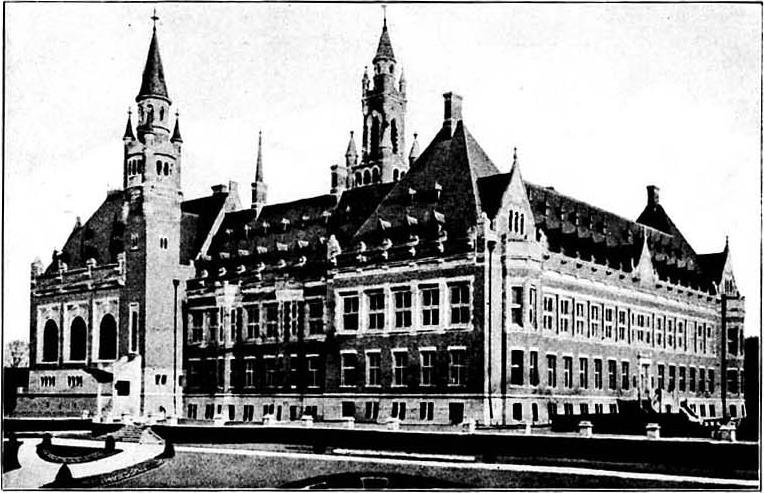
The judgment was read out over three hours at the Peace Palace in The Hague by ICJ President Judge Yuji Iwasawa. By nine votes to six, the court found that the Republic of the Union of Myanmar “has committed genocide against the Rohingya group in Northern Rakhine State.” The 191-page judgment is final and binding, with no right of appeal.
The case was brought by The Gambia in November 2019 under the 1948 Genocide Convention, accusing Myanmar of violating the treaty during the military’s so-called clearance operations in 2016 and 2017. Seven years after the case was filed, the court has now delivered its verdict — and ordered Myanmar to provide reparations to the victims.
Read also: ASEAN Summit 2026: 49th Summit Begins in Manila, PM Modi Attends ASEAN-India Summit
What the Court Found
The court found that Myanmar’s security forces killed thousands of Rohingya civilians, carried out widespread sexual violence, and committed acts of “extreme violence against children” during the 2017 crackdown in Rakhine State. The judges said the killing of babies and children and the burning of Rohingya villages could not be considered a legitimate part of a military operation.
On the question of numbers, the court adopted a United Nations fact-finding mission figure of at least 10,000 deaths during the clearance operations, saying it was supported by the record. The court also found that nearly 400 villages — around 40 percent of the almost 1,000 villages in the three townships of northern Rakhine State — were partially or totally destroyed, with permanent structures built in their place and non-Rohingya people resettled there.
The military’s campaign also involved mass executions of men and boys, widespread rape and sexual violence against Rohingya women and girls, and the burning or razing of hundreds of villages. The court noted that the rape and gang rape of Rohingya women and girls caused physical harm and psychological trauma and reduced their chances of having children — and that the murder of infants supported the inference that the security forces acted with the intent to prevent births among the group.
Perhaps most significantly, the court ruled that genocidal intent can be inferred from context, even without direct evidence of orders — citing factors such as crimes specifically targeting the Rohingya as a group. “The only reasonable inference that can explain Myanmar’s actions is an intention to destroy a substantial part of the protected group, namely the Rohingya population in Northern Rakhine State,” Judge Iwasawa said.
| Key fact | Detail |
|---|---|
| Judgment date | November 19, 2026 |
| Court | International Court of Justice, The Hague |
| Vote | 9-6 in favour of the genocide finding |
| Judgment length | 191 pages |
| Case filed by | The Gambia, November 2019 |
| Rohingya who fled in 2017 | Around 750,000, mostly to Bangladesh |
| Deaths adopted by the court | At least 10,000 (UN fact-finding figure) |
| Villages destroyed | Nearly 400 of about 1,000 in northern Rakhine |
What Happened in 2017
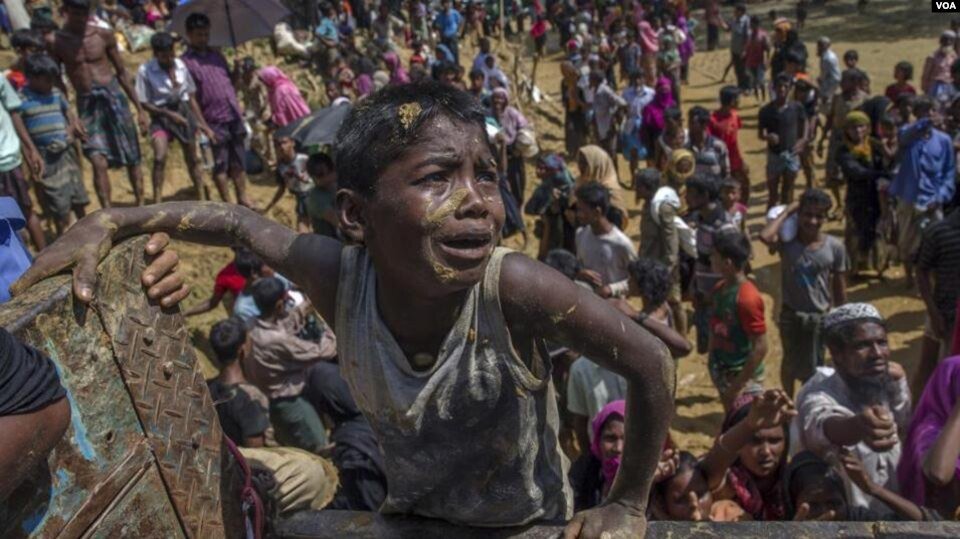
The Rohingya are a mostly Muslim ethnic group who have lived in Rakhine State in western Myanmar for generations but have long faced discrimination and been denied citizenship. In August 2017, Myanmar’s military launched a major offensive that the court described as a campaign of systematic killing, sexual violence and forced displacement.
Around 750,000 Rohingya fled their homes and crossed into neighbouring Bangladesh, where most still live in crowded refugee camps in Cox’s Bazar — now one of the largest refugee settlements in the world. The court noted that those who fled had little or no prospect of returning because their homes had been destroyed.
The court also found that Myanmar’s military actively spread hate speech targeting the Rohingya population using Facebook, which was the most popular social media platform in the country at the time. The 191-page judgment even referenced a Reuters investigation into the killing of 10 Rohingya Muslims in the village of Inn Din on September 7, 2017 — two of the news agency’s reporters were arrested and held for more than 500 days after reporting on it.
Why This Ruling Is Historic
Since the Nazi Holocaust, only three other times has an international court ruled that the legal threshold to prove genocide had been met — but never before has the International Court of Justice held a state itself responsible for committing the crime. Previous genocide convictions were against individuals, not countries.
The ruling is also the first time the court has said that genocidal intent can be established from the pattern of crimes alone. Legal experts say that part of the judgment could matter well beyond Myanmar, because other genocide cases currently before the court — including South Africa’s 2023 case accusing Israel of genocide in Gaza — raise similar questions about how intent is proved.
Minority Rights Group, which has campaigned for the Rohingya for years, called the ruling a world first and said it “permanently shattered” the claim that the military’s actions were a legitimate counter-insurgency operation.

What Myanmar Must Do Now
Alongside the genocide finding, the court ordered Myanmar to end all acts of violence, investigate those suspected of involvement, prosecute and punish those found guilty, and provide guarantees that such crimes will not happen again. It also found that Myanmar violated its obligation to prevent genocide.
The reparations order is wide-ranging. Myanmar must facilitate the safe and voluntary return of Rohingya refugees, restore or replace damaged collective property, help locate missing people, and ensure proper burials for victims. Survivors must receive physical and psychological rehabilitation, and the court ordered compensation where return or restoration is not possible. The court did not fix an amount of compensation; instead, it ordered Myanmar to submit a report within two years setting out its plan.
The ruling also obliges every other nation to play its part — by neither recognising the present situation as lawful nor assisting Myanmar in maintaining it.
What Happens Next
The judgment is final and cannot be appealed. But the ICJ has no police force or mechanism of its own to enforce its rulings. If Myanmar fails to comply, The Gambia can refer the matter to the United Nations Security Council, which can impose measures to enforce the ruling.
That is where the limits of the verdict become clear. Myanmar’s military government has not yet said whether it will comply, and previous ICJ orders in this same case — including provisional measures issued in 2020 ordering Myanmar to protect the Rohingya — were largely ignored. UN Secretary-General Antonio Guterres said the judgment “will be studied carefully within the United Nations” and stressed that international law, including the Genocide Convention, “must be respected by all.”
For the roughly one million Rohingya refugees in Bangladesh, the ruling raises hope but changes little overnight. Their return home depends on Myanmar creating conditions in Rakhine State that are safe — something the court itself said does not yet exist. Still, after nearly a decade of waiting, the world’s highest court has now said, in plain terms, what happened to them was genocide. That finding cannot be taken back.
Read also: PM Modi to India Inc at FICCI Centenary: ‘I Waived Tax Up to Rs 12 Lakh — Have You Raised Salaries?’