On November 20, 2026, the U.S. Department of War released the eighth batch of its declassified UAP files — 43 new files, including three military videos that the government itself cannot identify. The release is part of PURSUE, the Presidential Unsealing and Reporting System for UAP Encounters, which has been publishing formerly classified files in batches since May 2026. Across all eight releases, one thing has not changed: there is still no proof that alien craft are visiting Earth.
What the Eighth Release Contains
The new batch adds 40 documents and three videos to the public archive at war.gov/UFO. The records span from 1949 to 2026, mixing Cold War-era Air Force and CIA files with sensor footage recorded as recently as this year. The department says it will keep releasing files on a rolling basis, and work on the next batch is already underway.
| Release | Date in 2026 | What it added |
|---|---|---|
| Batch 1 | May 8 | First declassified UAP files |
| Batch 2 | May 22 | Second tranche |
| Batch 3 | June 12 | Third tranche |
| Batch 4 | July 10 | Fourth tranche |
| Batch 5 | August 7 | Fifth tranche |
| Batch 6 | September 18 | Sixth tranche |
| Batch 7 | October 23 | 28 files, including the FBI black triangle case |
| Batch 8 | November 20 | 43 files: 40 documents and 3 videos |
The Three Videos From the Middle East
All three videos were submitted by U.S. Central Command to AARO, the Pentagon’s UFO office, and all three were recorded in the Middle East with military sensors. The department lists every one of them as an unresolved case — meaning the government was unable to determine what the footage shows, in part because too little data was released with it.
The first clip, from 2020, is 20 seconds of black-and-white infrared footage, catalogued as DOW-UAP-PR166. It shows the outline of a ship resembling an aircraft carrier, with a small dot passing beside it from right to left before moving away upward. Several parts of the image are covered by black rectangles. The second clip, from 2023, lasts 13 seconds and shows a small dot that abruptly changes direction several times. The third and longest clip, from 2026, runs 54 seconds and shows several dots moving together over the ocean, with the sensor zooming in and briefly losing two of the objects.
No mission reports or other sensor data were released with the videos, which is exactly why they remain unresolved. The department says it welcomes independent analyses of the footage.
Eight Radar Hits in 84 Seconds
One of the most discussed documents in the batch is a 2023 civil air-surveillance radar file from the western United States. It recorded eight detections over 84 seconds at estimated altitudes of 55,000 to 70,000 feet (16,760 to 21,300 meters) — far above normal commercial air traffic. The file is the first radar-track analysis published in the PURSUE releases, but on its own it identifies nothing: radar returns without matching visual or infrared data cannot say what was actually in the sky.
Kelly Johnson’s 1953 Sighting — the Most Famous Name in the Batch
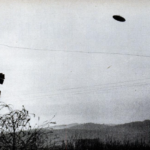
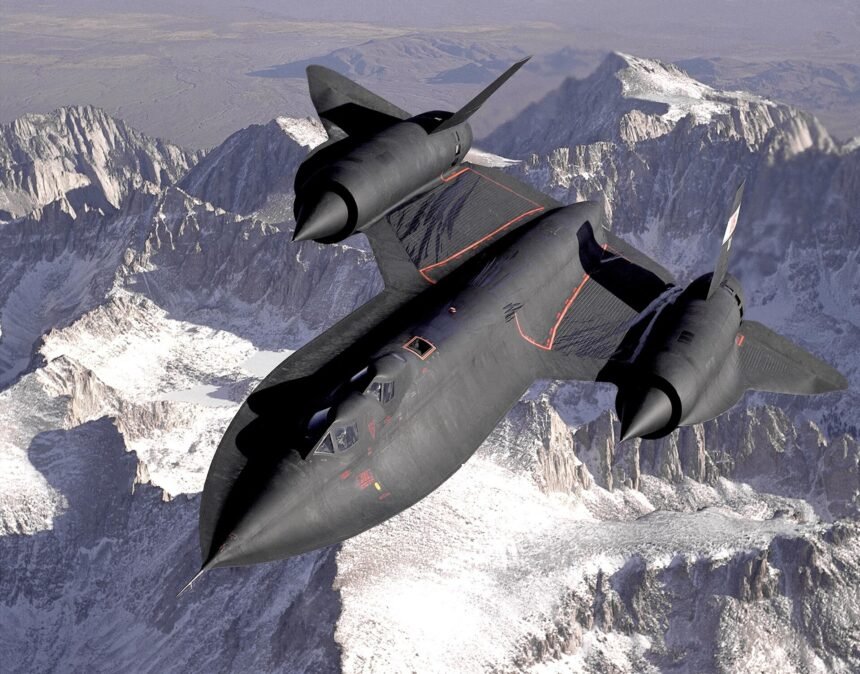
The most striking historical record in the release is the first complete government publication of a sighting by Clarence “Kelly” Johnson, the Lockheed chief engineer who later designed the U-2 spy plane and the SR-71 Blackbird. On December 16, 1953, Johnson reported seeing a dark, elliptical object hover for several minutes over his ranch west of Agoura, California, before moving west and disappearing.
Around the same time, Lockheed flight-test personnel near Point Mugu reported a dark, wing-like object. An Air Force record ultimately classified the sighting as a lenticular cloud — a lens-shaped cloud formation that can look solid and strange from the ground. Johnson’s account carries weight because of who he was, but a credible witness is not the same as proof of what the object was.
A 1952 CIA Briefing, and the 2009 Report Already Covered
The batch also includes an August 14, 1952 briefing by the CIA’s Office of Scientific Intelligence, which assessed the Air Force’s investigation of flying saucer reports and their potential intelligence implications. It is a reminder that the U.S. government has been studying unexplained sightings at the highest levels for more than 70 years.
The batch’s longest document — a 538-page 2009 report by Bigelow Aerospace Advanced Space Studies, outlining plans for a secure underground facility to store recovered hardware and biological samples — was covered in detail in our earlier post today, linked above. It is part of the same November 20 release, not a separate disclosure.
What Is Still Unproven
Secretary of War Pete Hegseth said “it is time for Americans to see the files with their own eyes,” and Pentagon spokesman Sean Parnell confirmed work on the next batch is already underway. That transparency is real — but so far, across all eight releases, no file contains proof of alien technology. Astronomer Avi Loeb, who has reviewed the new batch, says it contains no measurement that points to technology of non-human origin. And a preliminary analysis by Jacob Haqq-Misra of the UAP Science Advisory Council found that in the 2026 footage, seven objects show periodic changes in infrared brightness, as expected from birds flapping their wings.
The files are valuable because they show what the government saw, recorded, and could not explain — not because they answer the question. The 2020, 2023, and 2026 videos remain genuinely unresolved, the radar tracks remain unexplained, and Kelly Johnson’s 1953 object remains, in the Air Force’s own words, a cloud. Until a future release brings sensor data that can be tested, the honest summary is the same as after every batch so far: interesting, unexplained — and unproven.