In March 1967, at the height of the Cold War, two flights of American nuclear missiles went silent within eight days of each other at the same Montana air base. Each time, all ten missiles in a flight dropped off alert almost at once. Each time, guards reported a strange object in the sky above the launch facilities. The shutdowns are a matter of official record. What caused them is still argued about nearly 60 years later.
Ten Missiles, One Morning in March
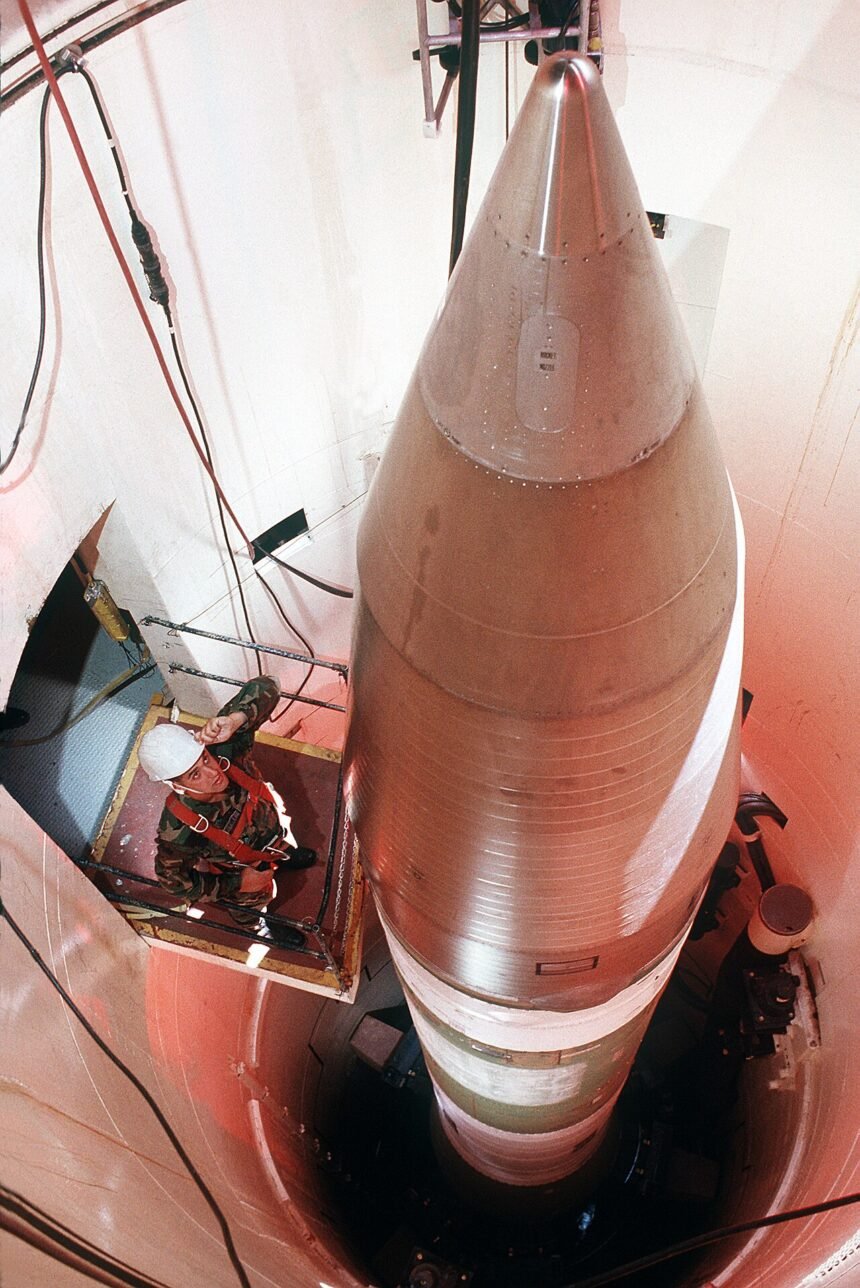
On the morning of March 16, 1967, First Lieutenant Walter Figel was the deputy crew commander on duty at Echo Flight, one of Malmstrom Air Force Base’s Minuteman missile launch control centers in central Montana. A Minuteman flight is ten intercontinental ballistic missiles, each armed with a nuclear warhead, controlled from an underground capsule. Figel was briefing his commander, First Lieutenant Eric Carlson, when an alarm horn sounded. One missile had gone off alert. Then another. Within an estimated 10 to 40 seconds, all ten Minuteman I missiles in Echo Flight had dropped to “No-Go” status. The crew called the guard posted above ground. The guard reported a large, round object hovering over the site.
Strategic Air Command headquarters immediately ordered a complete engineering analysis, and a technical team from Boeing and other contractors flew in from Seattle. The investigators were unable to determine a logical cause. Their best guess was that an electronic noise pulse had reached the missiles’ logic couplers — but no failure was ever found that explained it. The 341st Strategic Missile Wing’s unit history records the episode under the heading “Investigation of Echo Flight Incident.” The same history adds a detail often left out of retellings: it says rumors of unidentified flying objects around Echo Flight were investigated and disproven, and that a mobile strike team sent to the area reported no unusual activity.
Eight Days Later, It Happened Again
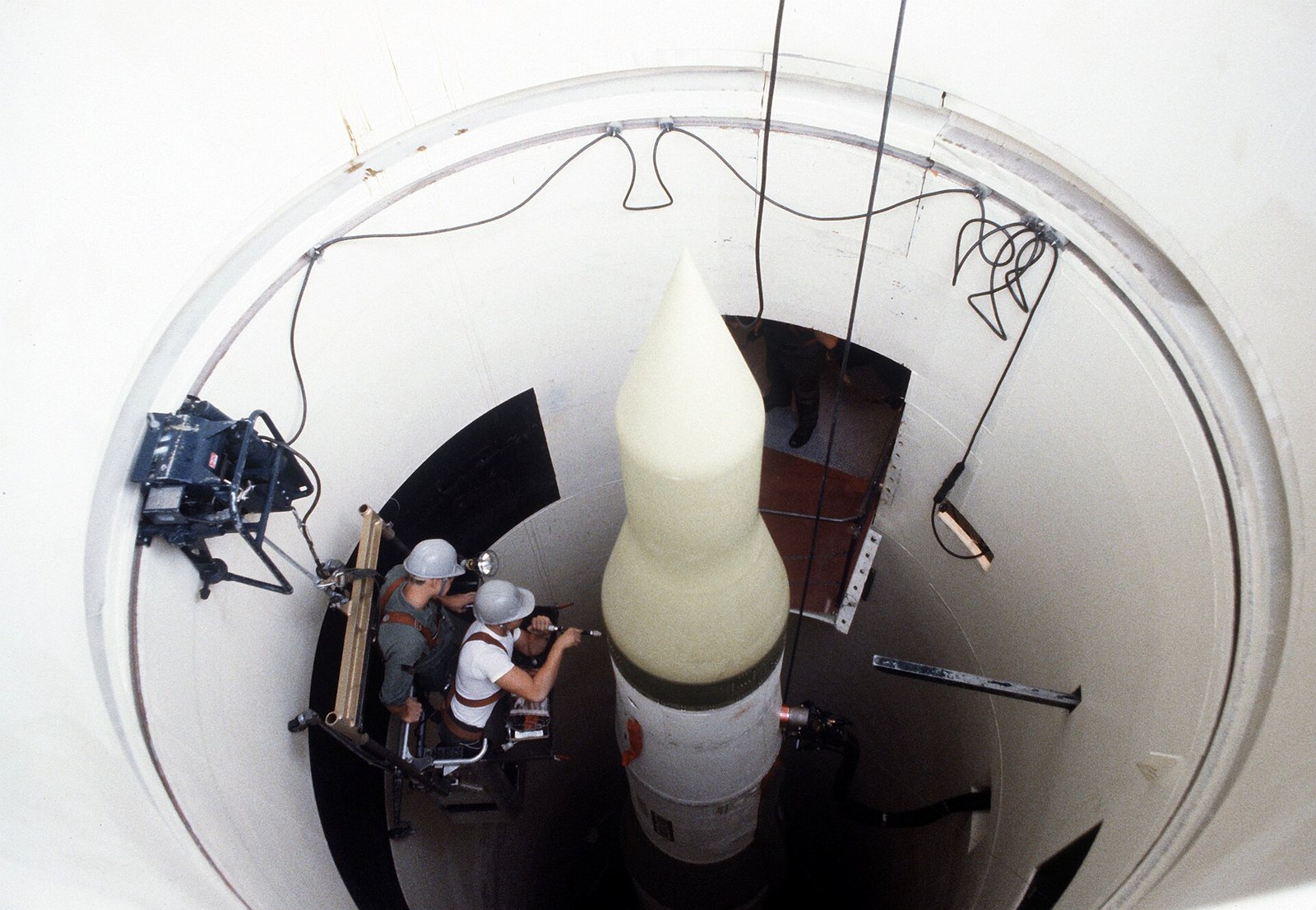
On the evening of March 24, 1967, First Lieutenant Robert Salas was on duty as deputy missile combat crew commander at Oscar Flight, a launch control center south of Roy, Montana, about 60 feet underground. Late in the evening, the guards above called down to report a star-like object zigzagging in the sky. Salas told them to keep watching. Minutes later, the non-commissioned officer in charge called back, clearly frightened: a glowing red, oval-shaped object, about 30 to 40 feet across, was hovering directly over the facility’s front gate.
Almost immediately, Salas’s missiles began dropping into “No-Go” status, one by one, until all ten were offline. His commander, Captain Frederick Meiwald, woke from a rest period to find the entire flight gone. The guards were so frightened that one was reportedly injured. Unlike Echo Flight, the guard report at Oscar Flight was never formally included in the incident documentation.
The Officer Who Stayed Silent for 28 Years
Salas said nothing in public for nearly three decades, bound by a non-disclosure agreement and told by the Air Force Office of Special Investigations to keep quiet. In 1994, browsing in a bookstore, he found UFO researcher Timothy Good’s book “Above Top Secret,” which mentioned UFO sightings at Malmstrom. Believing his own experience was already public, Salas went public in 1996, filed Freedom of Information Act requests, and later co-wrote the book “Faded Giant” with researcher James Klotz. In September 2010, he co-sponsored a news conference at the National Press Club in Washington, D.C., where he and six other former military officers publicly testified about UFO incidents at American nuclear weapons bases. He has since discussed his 1967 experience with members of Congress, including House Committee chair Representative Nancy Mace in 2024.
What the Pentagon’s Own Investigation Found
In February 2024, the Pentagon’s All-domain Anomaly Resolution Office (AARO) published Volume I of its historical record report, reviewing U.S. government involvement with unidentified anomalous phenomena from 1945 to October 2023. The report directly addressed the nuclear-missile claims. AARO interviewed five former Air Force members who had served around intercontinental ballistic missile silos at Malmstrom, Ellsworth, Vandenberg, and Minot between 1966 and 1977. Some described UAP sightings near the silos; others described launch control facilities going offline or losing power.
AARO’s conclusion was blunt: it found no evidence that unidentified anomalous phenomena caused the ICBM disruptions, and no evidence that any sighting of a UAP represented extraterrestrial technology. The pattern, however, did not end in 1967. In the fall of 1975, memoranda from the National Military Command Center logged incursions over northern-tier bases, starting at Loring Air Force Base in Maine and continuing at Wurtsmith, Malmstrom, and Minot. And on October 23, 2010, at F.E. Warren Air Force Base in Wyoming, the Air Force lost contact with 50 Minuteman III missiles for nearly an hour — a failure it blamed on a faulty circuit card. Malmstrom remains one of only three U.S. bases that still house nuclear missiles, alongside Minot and F.E. Warren.
What Is Still Unproven
Here is what the record actually supports. The Echo Flight shutdown is real and documented in the unit history: ten nuclear missiles went offline in seconds, and no technical cause was ever established. The Oscar Flight account rests on the testimony of Salas and the guards, and the official record of that night is thinner — the guard report was never formally filed. AARO, after interviewing the witnesses and reviewing the files, found no evidence that an unidentified object caused either shutdown, and no evidence of alien technology anywhere in the files it examined. The missiles went silent. Why they went silent is still, officially, unknown.
The Malmstrom UFO Incident: Key Facts
| Fact | Detail |
|---|---|
| First incident | March 16, 1967, morning — Echo Flight, Malmstrom AFB, Montana |
| Second incident | March 24, 1967, evening — Oscar Flight, south of Roy, Montana |
| What failed | All 10 Minuteman I missiles in each flight dropped to “No-Go” status |
| Echo Flight crew | 1st Lt. Walter Figel (deputy commander) and 1st Lt. Eric Carlson |
| Oscar Flight crew | 1st Lt. Robert Salas (deputy commander), Capt. Frederick Meiwald |
| Objects reported | Large round object over Echo Flight; glowing red oval, about 30-40 feet across, over Oscar Flight’s gate |
| Official finding | Engineering analysis found no cause; electronic noise pulse only a speculation |
| Pentagon review | AARO Historical Record Report, February 2024: no evidence UAP caused the disruptions; no evidence of extraterrestrial technology |