In the last winter of World War II, Allied airmen flying night missions over Europe began seeing something they could not explain. Glowing balls of light — fiery orange, red, or white — appeared beside their aircraft, kept pace with them through turns, and then vanished as suddenly as they had come. They never attacked. They never showed up on radar. And after 80 years, no one has proven what they were. The airmen called them “foo fighters,” and they are the oldest well-documented wave of military UFO encounters on record.
The Night the 415th Met the Lights
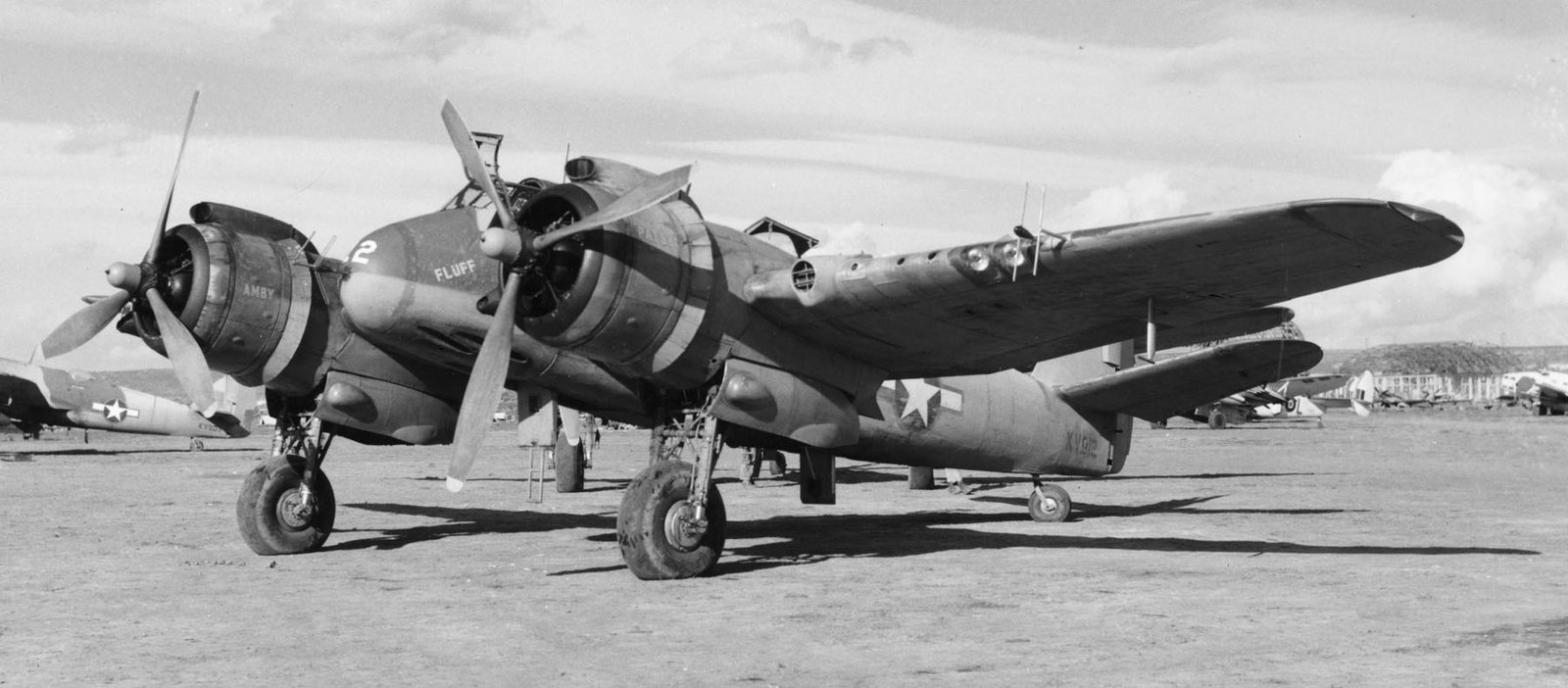
The encounter that made the phenomenon famous happened on a late-November night in 1944, over the Rhine Valley near Strasbourg on the French-German border. Lieutenant Edward Schlueter was piloting a Bristol Beaufighter night fighter of the 415th Night Fighter Squadron, with Lieutenant Donald J. Meiers operating the radar and Lieutenant Frederic “Fritz” Ringwald riding along as an observer. It was partly cloudy, with a quarter moon.
Ringwald was the first to speak up, pointing out strange lights over the hills. Then the crew saw them clearly: eight to ten bright orange lights in a row, off their left wing, flying at high speed. Schlueter checked with Allied ground radar, but the radar registered nothing. Thinking the lights might be some kind of German air weapon, he turned his plane to fight — and the lights simply vanished.
At first the men said nothing, afraid they would be laughed at. But the sightings spread through the squadron, and within weeks the lights had a name.
Read also: Project Blue Book: How the US Air Force Investigated 12,618 UFO Sightings — and Why 701 Stayed Unexplained — https://khabaryukti.com/project-blue-book-us-air-force-12618-ufo-sightings-701-unexplained/
A Wave Across Two Theaters
The 415th was not the first to see them. Royal Air Force crews had reported lights following their aircraft as early as March 1942, and American crews of the 422nd Night-Fighter Squadron recorded sightings in occupied Belgium in the first week of October 1944. At the time, those early lights were mistaken for the Messerschmitt Me 163 rocket interceptor — which did not operate at night. The bulk of the reports, though, began in the last week of November 1944, when night pilots over Western Europe started seeing fast-moving, round, glowing objects following their aircraft.
The descriptions were strikingly consistent. The objects were fiery and glowing — red, white, or orange. Some pilots said they looked like Christmas-tree lights. They flew in formation with the aircraft, seemed to toy with it, made wild turns, and then disappeared. They behaved as if they were under intelligent control, but they never showed hostile behavior.
On December 17, 1944, near Breisach, Germany, a pilot flying at about 800 feet saw “5 or 6 flashing red and green lights in ‘T’ shape.” The lights closed in on him to about 1,000 feet before vanishing. On December 22, two more flight crews reported lights near Hagenau that seemed to rise from the earth to 10,000 feet, tailing the fighter for about two minutes before peeling off and flying away level. Lieutenant Samuel A. Krasney reported a wingless, cigar-shaped object glowing red, just a few yards off his wingtip, which stayed beside the plane for several minutes despite evasive maneuvers before flying off and disappearing.
The phenomenon was not limited to Europe. Similar reports came from the Pacific Theater, where B-29 crews over Japan and naval aviators over the Solomon Islands described the same glowing orbs. And the mystery deepened when the Allies learned that German and Japanese pilots had reported similar sightings of their own — so whatever the lights were, they were not a secret weapon of either side.
The Name Came From a Comic Strip
The airmen named the lights “foo fighters,” after the popular comic strip “Smokey Stover,” in which the firefighter Smokey often declared, “Where there’s foo, there’s fire.” The phrase was wartime slang before the war had even ended, and it stuck. Eighty years later, “foo fighter” is still the standard name for the phenomenon — and the term entered the English language from those night skies over the Rhine.
The Military Took It Seriously
The military did not laugh the reports off. On December 13, 1944, the Supreme Headquarters Allied Expeditionary Force in Paris issued a press release officially describing the phenomenon, printed in The New York Times the next day. On January 2, 1945, SHAEF sent a SECRET classified message to the War Department in Washington asking for an assessment. Washington produced none on the record, so SHAEF turned to London.
On March 13, 1945, the British Air Ministry sent its written reply. It noted that RAF Bomber Command crews had made similar reports, that a small number of the sightings might have been Messerschmitt Me 262 jet fighters, and that flak rockets were the “most likely” candidate for the rest. Then it put the case in writing in a sentence that has run ever since: “the whole affair is still something of a mystery.” Five days later, SHAEF forwarded the assessment up its own chain and closed the file with “no further, or more definite, information.”
Read also: AARO’s 2024 Report: The Pentagon Reviewed 80 Years of UFO Files and Found No Evidence of Alien Technology — and What It Left Open — https://khabaryukti.com/aaros-2024-report-the-pentagon-reviewed-80-years-of-ufo-files-and-found-no-evidence-of-alien-technology-and-what-it-left-open/
What the Experts Said Later
The foo fighters outlived the war in the official files. In January 1953, the CIA convened a scientific panel chaired by Caltech physicist Dr. H. P. Robertson — the Robertson Panel — to review the postwar UFO problem. The panel cited the foo fighter reports and suggested they “might have been electrostatic (similar to St. Elmo’s fire) or electromagnetic phenomena or possibly light reflections from ice crystals in the air.” But in the very same passage, the panel admitted their “exact cause or nature was never defined.”
The panel also made a remark that sums up the whole case: “If the term ‘flying saucers’ had been popular in 1943-1945, these objects would have been so labeled.” In other words, the foo fighters were the flying saucers of their day — reported by trained military observers, documented in squadron records, and never identified.
Other explanations have been offered since: ball lightning, St. Elmo’s fire clinging to the airframe, misidentified flares or tracer fire, and combat stress. Each explains part of the picture. None has ever been shown to fit a documented encounter — St. Elmo’s fire stays on the airframe and does not fly in formation off a wingtip, and ball lightning is not known to pace an aircraft for minutes at matched speed. The dispute is not about whether the sightings happened. The squadron war diaries and the 1945 press record establish that beyond question. It is about what the lights were, and that question is still open.
| Fact | Detail |
|---|---|
| First famous encounter | Late November 1944, Rhine Valley near Strasbourg; 415th Night Fighter Squadron (Schlueter, Meiers, Ringwald) |
| Object described | 8-10 bright orange lights in a row; later red, white, or orange glowing balls, sometimes cigar-shaped, no wings or fuselage |
| Earlier sightings | RAF crews from March 1942; 422nd Night-Fighter Squadron, early October 1944 |
| Peak of the wave | November 1944 to May 1945, European and Pacific theaters |
| Notable cases | December 17, 1944 near Breisach (“T”-shaped lights); December 22, 1944 near Hagenau (lights rose to 10,000 feet, tailed fighter 2 minutes) |
| Official response | SHAEF press release December 13, 1944; British Air Ministry, March 13, 1945: “the whole affair is still something of a mystery” |
| Later review | Robertson Panel, January 1953: St. Elmo’s fire, electromagnetic effects, or ice-crystal reflections suggested — “exact cause or nature was never defined” |
| Name origin | “Smokey Stover” comic strip — “Where there’s foo, there’s fire” |
What Is Still Unproven
Here is the part that matters most. The foo fighters are real history: trained pilots, multiple crews, squadron records, a SHAEF press release, and a British Air Ministry file that ends by admitting the case is a mystery. None of that proves the lights were alien craft. It proves that something was seen and chased that the finest air forces of the war could not identify — and that, after 80 years, remains the honest answer.
That caution matches the Pentagon’s own modern review. The All-domain Anomaly Resolution Office examined 80 years of UFO files and reported in 2024 that it found no evidence of alien technology. No file released so far has shown proof that alien craft are visiting Earth, and the foo fighter files are no exception.
So why do the foo fighters still matter? Because they are where the modern UFO story begins — not with a crash or a photograph, but with calm, trained witnesses watching lights pace their aircraft and saying plainly that they did not know what they were. The lights over the Rhine were never identified. They were also never shown to be anything from beyond Earth. Both facts are true, and both are worth remembering.
For the full background on the Pentagon’s UAP files, see our guide: UFO Sightings in the USA 2026: Pentagon Files, the Alaska Jellyfish Video, and What Is Still Unproven — https://khabaryukti.com/ufo-sightings-in-the-usa-2026-pentagon-files-the-alaska-jellyfish-video-and-what-is-still-unproven/