In March 2024, the Pentagon’s All-domain Anomaly Resolution Office (AARO) released the first volume of its Historical Record Report — a 63-page review of nearly 80 years of U.S. government investigations into unidentified anomalous phenomena, or UAP. Congress had ordered the review in the National Defense Authorization Act for Fiscal Year 2023, and the result was the most sweeping official look at the UFO question ever published.
AARO’s team reviewed every official U.S. government investigatory effort since 1945, searched classified and unclassified archives, conducted dozens of interviews, and worked with intelligence and Defense Department officials who oversee secret and special access programs. The goal, the Pentagon said, was to investigate with “the widest possible aperture” — including the claim that the government and private companies have recovered and are hiding alien technology.
What the Report Found
The conclusions were blunt. Acting AARO Director Tim Phillips told reporters at the Pentagon that “AARO has found no verifiable evidence that any UAP sighting has represented extraterrestrial activity.” The report found no evidence that the U.S. government or private industry has ever had access to extraterrestrial technology, and no indication that information was illegally or inappropriately withheld from Congress.
Instead, AARO concluded that most sightings were ordinary objects and phenomena seen the wrong way — misidentified aircraft, balloons, satellites, and natural events. Every official investigation, the report said, reached the same conclusion at every level of classification.
The Claims AARO Checked One by One
The report did not ignore the sensational claims. It investigated them directly. AARO said the alleged hidden reverse-engineering programs named by interviewees either do not exist, are real national security programs misidentified as alien-related, or trace back to a program that was shut down.
One example was KONA BLUE, a proposed program to protect research related to extraterrestrial technology. AARO found it was never formally approved by leadership and never held any material or information. Another claim involved a piece of metal said to come from a crashed alien craft. When tested, it turned out to be an ordinary, man-made terrestrial alloy with no unusual properties.
AARO also found no evidence of any authentic UAP-related nondisclosure agreement threatening death or violence against anyone who talks — a claim that has circulated for years in UFO circles. The report said many of the reverse-engineering claims came from “circular reporting,” in which a small group of people repeated inaccurate claims they had heard from each other over several decades.
| Fact | Detail |
|---|---|
| Released | March 2024 |
| Length | 63 pages |
| Period covered | 1945 through October 2023 |
| Ordered by | Fiscal Year 2023 National Defense Authorization Act |
| Main finding | No verifiable evidence of extraterrestrial technology |
| Next step | Volume II, covering information received after November 1, 2023 |
What the Report Did Not Settle
The findings drew a sharp reaction. Supporters of disclosure, including some lawmakers and former officials, said a historical review cannot settle what may be happening today. The report itself was careful on this point: it said its work was not over. A second volume was promised, covering interviews and information received after November 1, 2023, and AARO said it would share anything that updates its findings with Congress and the public.
That matters because the Pentagon’s own newer releases still list some cases as unresolved. In its eighth UAP file release, the Pentagon published three military videos and mystery radar tracks it could not explain — a reminder that “no evidence of alien technology” is not the same as “every sighting explained.”

Why This Report Still Matters
Two years after its release, the AARO report remains the baseline for the UFO debate in Washington. It is the document skeptics cite when they say the government has looked and found nothing — and the document believers argue around when they say the search was not complete. Both sides agree on one thing: the files are now public, and anyone can read the 63 pages and judge the evidence for themselves.
No file released so far — not this report, not the Pentagon’s later video releases, not NASA’s own 2023 study — has produced proof of alien technology. That is the honest state of the record. What remains unproven is not the same as what is impossible, and that gap is exactly why the Pentagon keeps investigating.
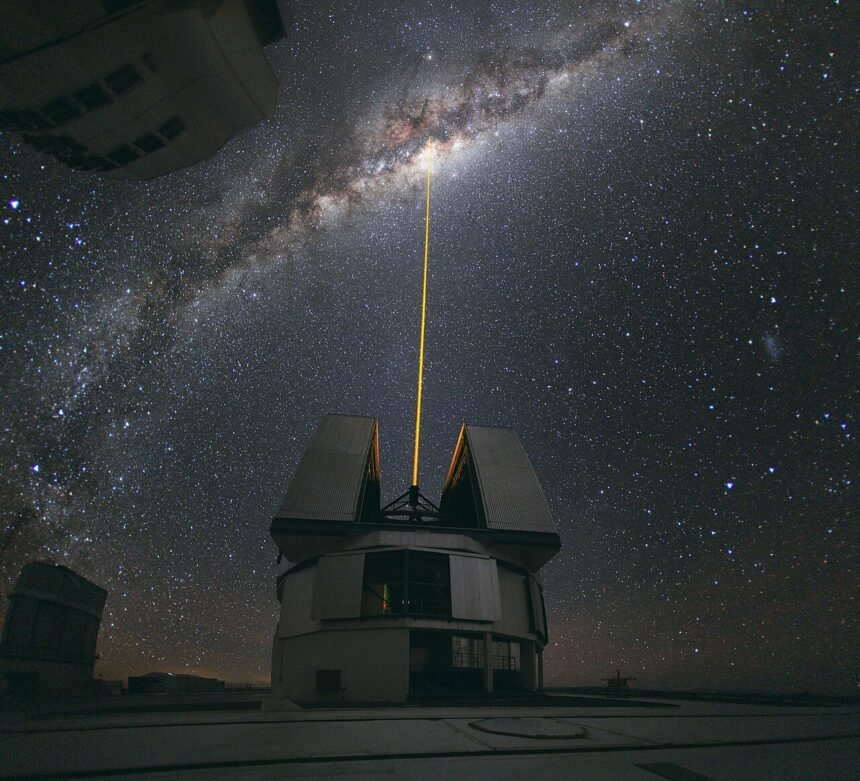
Image credits: Telescope laser image by Yuri Beletsky / ESO (CC BY 4.0); Milky Way over Nevada (CC BY 2.0), both via Wikimedia Commons.