In the second half of 1977, people on a small island at the mouth of the Amazon River stopped sleeping at night. Fishermen stayed ashore after dark. Families crowded five or six to a house, lit fires, banged cans, set off fireworks, and kept shotguns ready for something that, as one survivor later put it, “didn’t even make a sound.” They were waiting for the lights.
The island was Colares, in the Brazilian state of Pará, about 96 kilometers from the state capital, Belém. For months, residents said glowing objects came in low from the sea at night and sent narrow beams of light down onto people — beams that left burns, small puncture marks, and victims weak, numb, or paralyzed. The townspeople gave the lights a name: chupa-chupa, roughly “suck-suck,” because they believed the beams drew something out of the people they struck.
Nearly 50 years later, the case is back in the news. In 2026, a Pentagon document release put the Colares files in front of American readers again, and a Brazilian television documentary returned to the island. Here is what the records actually show — and what is still unproven.
A fishing island that stopped sleeping
In 1977, Colares had a population of about 2,000 people, mostly subsistence fishermen and farmers living in simple wooden houses, many without electricity. Scattered reports of strange lights in the region began as early as April 1977, but the wave gathered force in the second half of the year and peaked between August and December, spreading to nearby Mosqueiro Island and the town of Vigia.
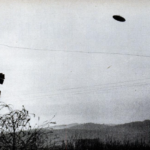
Witnesses described objects of many shapes: silent discs, cylinders, and small fast-moving lights, often yellow-red or bluish-white, that hovered low over rooftops or came in from the sea. What set Colares apart from an ordinary sighting wave was the reported contact. People said thin beams of light, estimated at about 25 centimeters across, struck them on the chest or neck, sometimes through roofing material, causing sudden heat, paralysis, dizziness, and small burn marks.
About 35 people were documented as injured. The town doctor, Wellaide Cecim Carvalho, treated dozens of patients with unexplained superficial burns and marks, and she said publicly for decades afterward that the injuries were real and unlike anything else in her medical practice.
“Chupa-chupa”: the witnesses
Several individual accounts became central to the case. Claudomira Paixão, a Colares resident, said she was struck on the chest by a beam of greenish-white light while sleeping in a hammock. She described being paralyzed and feeling an intense sucking sensation, and when examined she had three circular burn marks on her upper chest, each roughly two centimeters across.
Fisherman Manoel Matos de Souza said he tried to shoot at an object and was struck by a red beam that left him unable to move. Another resident, Benedito Ferreira de Figueiredo, described an intense blue light filling his house. Newton de Oliveira Cardoso, then 18 years old, became one of the best-known victims after a beam struck him and left him weak and marked.
These are witness accounts, preserved in the investigation files and in later interviews. They were never independently confirmed by a laboratory or a second instrument — a distinction that matters, and one this article keeps throughout.
Operation Saucer: the Air Force investigates

The reports reached the Brazilian Air Force’s First Regional Air Command (I COMAR) in Belém, which sent an intelligence team to the island. The inquiry was called Operação Prato — “Operation Saucer,” literally “Operation Plate.” According to the Brazilian Air Force’s own history, it was the first operation the force ever conducted solely to investigate UFO reports.
The officer in charge was Captain Uyrangê Hollanda, then commander of the intelligence section. The first mission ran from October 20 to November 11, 1977, and a second from November 25 to December 5. Over about four months, the team logged hundreds of witness interviews across some 30 communities, took photographs of unexplained lights — estimates run to about 500 photos — shot about 15 hours of film, and produced reports with maps, sketches, and an internal classification of the objects by shape and behavior.
Then, in early 1978, the operation was abruptly ended without any public conclusions. The files were classified and stayed that way for nearly two decades.
The files come out — and the commander’s interview
Partial releases of the Operation Prato documents began in the late 1990s, and the full file set was formally declassified in 2004 after years of pressure from Brazilian researchers, including ufologist Ademar José Gevaerd. The released material confirms the scale of the operation — the interviews, the sketches, the log entries recording the investigators’ own sightings — though researchers say much of the photographic and film material has never been released.
In 1997, the now-retired Colonel Hollanda gave a long filmed interview to Gevaerd and his colleagues. He confirmed the operation, described far more material than had ever been officially released, and said he personally believed the phenomena were real, technological, and not of human origin. He also described his own close-range sightings during the operation, including objects he watched maneuver at treetop height over the Baía do Sol.
Weeks after the interview aired, Hollanda was found dead at his home. His death was recorded as a suicide by hanging. His interview remains the most detailed first-hand account from inside Operation Saucer — and the most disputed, because it rests on one man’s word.
Why Colares is back in the news in 2026
The case returned to public attention this year through two separate developments. First, the Pentagon’s eighth tranche of UAP documents, released on the U.S. government’s war.gov/UFO portal, included a 538-page report produced in July 2009 by BAASS (Bigelow Aerospace Advanced Space Studies), the contractor behind the Pentagon’s AAWSAP program. More than 60 pages of that report focus on Brazil.
According to summaries of the released material, the BAASS database logged 179 records from Pará state: 151 of them reported by the Brazilian military, and 94 of them directly observed by Brazilian Air Force personnel. The summaries also cite 23 physiological incidents and three associated deaths in the material. A separate summary of the same report says it claims 514 victims across Brazil from 1977 to 2003 and 10 deaths after prolonged illness. These are claims inside a contractor’s report, not confirmed findings — the two summaries do not agree on the numbers, and the documents do not say whether the Brazilian Air Force ever handed over its files.
Second, on October 29, 2026, the Brazilian streaming service Globoplay premiered Arquivos do Céu (“Files From the Sky”), a five-part documentary series from Globo’s journalism division, narrated by singer Lulu Santos and directed by Eliane Scardovelli, with Operação Prato at its center. “I’m convinced that something happened there,” Scardovelli told the newspaper O Liberal. In July 2026, the news site g1 reported on a local ufology expedition that now takes visitors to the beaches and streets where the 1977 reports were made.
What is still unproven
Colares is one of the best-documented UFO cases in the world — and still an unsolved one. The Brazilian Air Force never offered an explanation for the lights, the injuries were examined by a local doctor rather than a hospital laboratory, and the most dramatic material (the photographs and the film) remains largely unreleased. Skeptics have proposed explanations ranging from misidentified natural phenomena to social panic in a frightened town, but no proposed explanation has been tested against the full file set, because the full file set has never been made public.
What can be said plainly: no file released so far — Brazilian or American — contains proof of alien technology. The Pentagon’s own AARO office said the same in its March 2024 historical report, finding no evidence that any UAP sighting represented extraterrestrial craft. Colares remains a case of real reports, real injuries recorded by a real doctor, and a real military investigation that ended without an answer.
Colares at a glance
| Fact | Detail |
|---|---|
| Place | Colares Island, Pará, Brazil — at the mouth of the Amazon, about 96 km from Belém |
| When | Reports from April 1977; the wave peaked August–December 1977 |
| What was reported | Silent discs, cylinders, and lights; narrow beams striking people, leaving burns and puncture marks |
| Local name | “Chupa-chupa” (“suck-suck”) |
| Injuries documented | About 35 people; town doctor Wellaide Cecim Carvalho treated dozens |
| Investigation | Operação Prato (Operation Saucer), Brazilian Air Force, led by Captain Uyrangê Hollanda |
| Investigation dates | October 20 – November 11 and November 25 – December 5, 1977; ended early 1978 |
| Material gathered | Hundreds of interviews, about 500 photographs, about 15 hours of film |
| Declassification | Partial releases from the late 1990s; full file set formally declassified in 2004 |
| 2026 development | Pentagon’s eighth UAP document tranche released the 538-page 2009 BAASS report (DOW-UAP-D172) with 60+ pages on Brazil; Globoplay premiered the documentary series “Arquivos do Céu” on October 29, 2026 |
| Still unproven | The cause of the lights and injuries; no file contains proof of alien technology |
The lights over Colares did not leave a crashed craft, a piece of metal, or a photograph the world can examine. They left witness statements, a doctor’s notes, a military file that took 27 years to open — and a question that is still open nearly half a century later.