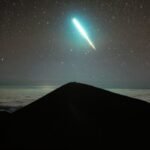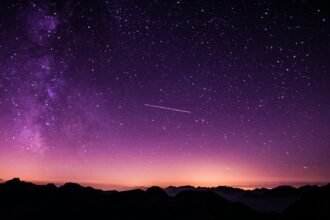
In a quiet farming valley in central Norway, balls of light have drifted through the night sky for nearly a century. They are white, yellow, or red. They hover, pulse, split apart, and vanish. They have been filmed, tracked on radar, and measured with scientific instruments — and after more than 40 years of study, no one can say with certainty what they are.
This is the story of the Hessdalen lights, one of the most scientifically studied UFO phenomena on Earth.
A Valley That Glows
Hessdalen is a narrow valley about 12 kilometers (7.5 miles) long in Holtålen Municipality, in the mountainous interior of Trøndelag county in central Norway. About 150 people lived in the valley in the early 1980s, and the area has a history of small-scale sulfide-ore mining.
Unusual lights have been reported in the valley since at least the 1930s. The lights appear both by day and by night, seeming to float through and above the valley, sometimes above the horizon and sometimes below it. A single sighting can last a few seconds or well over an hour.
The Great Wave of 1981–1984
What turned a local curiosity into a national sensation was a sudden, sustained wave of sightings that began in December 1981. Between December 1981 and mid-1984, the lights were reported 15 to 20 times per week — sometimes up to four times a day, mostly in the evening and at night, and mostly in winter.
The wave drew Norwegian national press attention, and overnight tourists traveled to the remote valley to see the lights for themselves. UFO organizations in Norway and Sweden took notice. But unlike most UFO waves, this one did not end with a shrug and a newspaper clipping. It ended with scientists setting up instruments.
Project Hessdalen: Science Moves In
In 1983, Erling Strand, a computer engineer at Østfold University College in Halden, Norway, launched Project Hessdalen with the support of UFO-Norge and UFO-Sverige. It was the first attempt to study the lights scientifically.
On the project’s first visit to the valley the following summer, the team saw 188 lights. They were confident that 53 of them could not be explained as illumination from buildings, vehicles, or planes. They filmed the lights, fired lasers at them, plotted their movements using radar, and ran a battery of tests. Their conclusion: this was undoubtedly a genuine phenomenon. Its cause, however, remained unknown.
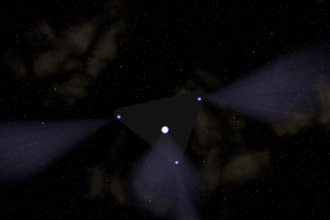
The work continued. In 1997 and 1998, a group of students, engineers, and journalists called “The Triangle Project” recorded lights in a pyramid shape that bounced up and down. In 1998, the Hessdalen Automatic Measurement Station (Hessdalen AMS) was set up in the valley to register and record the appearance of lights automatically.
Later, a program named EMBLA brought together established scientists and students to research the lights. The leading research institutions are Østfold University College in Norway and the Italian National Research Council.
What the Instruments Found
A long-term scientific survey of the phenomenon by Italian physicist Massimo Teodorani, published after years of field expeditions with optical, radio, and radar instruments, recorded some remarkable measurements.
| Location | 12-km stretch of Hessdalen valley, central Norway |
| Reports since | At least the 1930s |
| Peak activity | December 1981 to mid-1984, 15–20 sightings per week |
| Colors | Usually bright white, yellow, or red |
| Duration | A few seconds to well over an hour |
| Sightings by 2010 | Down to 10–20 per year |
| Peak radiant power | Up to 19 kW, varying with the light’s surface |
| Strange behavior | Clusters of light balls; ejects smaller balls; unidentified frequency shift in the VLF radio range |
| Project Hessdalen | Launched 1983 by Erling Strand; field work 1983–1985 |
| Automatic station | Hessdalen AMS set up in 1998 |
| Research program | EMBLA; Østfold University College and Italian National Research Council |
The survey found that the lights’ radiant power changes suddenly as clusters of light balls appear, behaving in a thermally self-regulated way. Some measurements even suggested characteristics consistent with a solid object, and possible deposition of metallic particles was reported.
The Leading Explanations — and Why None Has Won
Despite decades of research, there is no consensus on what causes the Hessdalen lights. Several natural explanations have been put forward, and each explains part of the evidence — but none explains all of it.
One explanation attributes the lights to an incompletely understood combustion of airborne dust from mining in the area. Analysis found hydrogen, oxygen, and other elements including titanium in the dust, and the valley holds large deposits of scandium. When this research was published, the Norwegian press proclaimed that “The Mystery in Hessdalen is Solved” — but the claim did not hold up, and the debate continued.
A hypothesis put forward in 2010 suggests the lights are formed by a cluster of macroscopic Coulomb crystals in a plasma, produced by the ionization of air and dust by alpha particles during radon decay in the dusty atmosphere. This model could explain several observed properties, including the lights’ oscillation, geometric structure, and light spectrum.
Other researchers have pointed to an electrochemical model for ball lightning. And some sightings have been positively identified as misperceptions of astronomical bodies, aircraft, car headlights, and mirages.
The honest scientific position, as the long-term survey itself states, is that a self-consistent, definitive theory of the phenomenon in all its aspects cannot yet be constructed.
What Is Still Unproven
No credible researcher associated with Project Hessdalen, EMBLA, or the peer-reviewed literature has proposed that the lights are a piloted, intelligently controlled craft of any origin. No evidence of alien technology has been found in the Hessdalen lights — or, as the Pentagon’s AARO concluded in its 2024 review of 80 years of UFO files, in any U.S. government UFO investigation.
What makes Hessdalen different from most UFO cases is not a claim about aliens. It is the opposite: a mysterious light that scientists chose to study instead of ignore, with cameras, radar, and spectrometers, for more than four decades. The lights are still seen today — 10 to 20 times a year as of 2010 — and the automatic station is still watching.
Whatever the Hessdalen lights turn out to be, they remain one of the best-documented reminders that the sky still holds phenomena science has not fully explained.
Sources: Wikipedia, “Hessdalen lights”; New Scientist, “Norse UFOs: What are the glowing orbs of Hessdalen?”; Massimo Teodorani, “A long-term scientific survey of the Hessdalen phenomenon” (ResearchGate).